
Get to Know
Piercing Strategies
Human-First Leadership. Aligned Leaders. Accountable Teams. Results That Show It.
We help organizations tackle the people side of their most important business challenges—from leadership development and organizational culture to executive alignment and AI transformation.
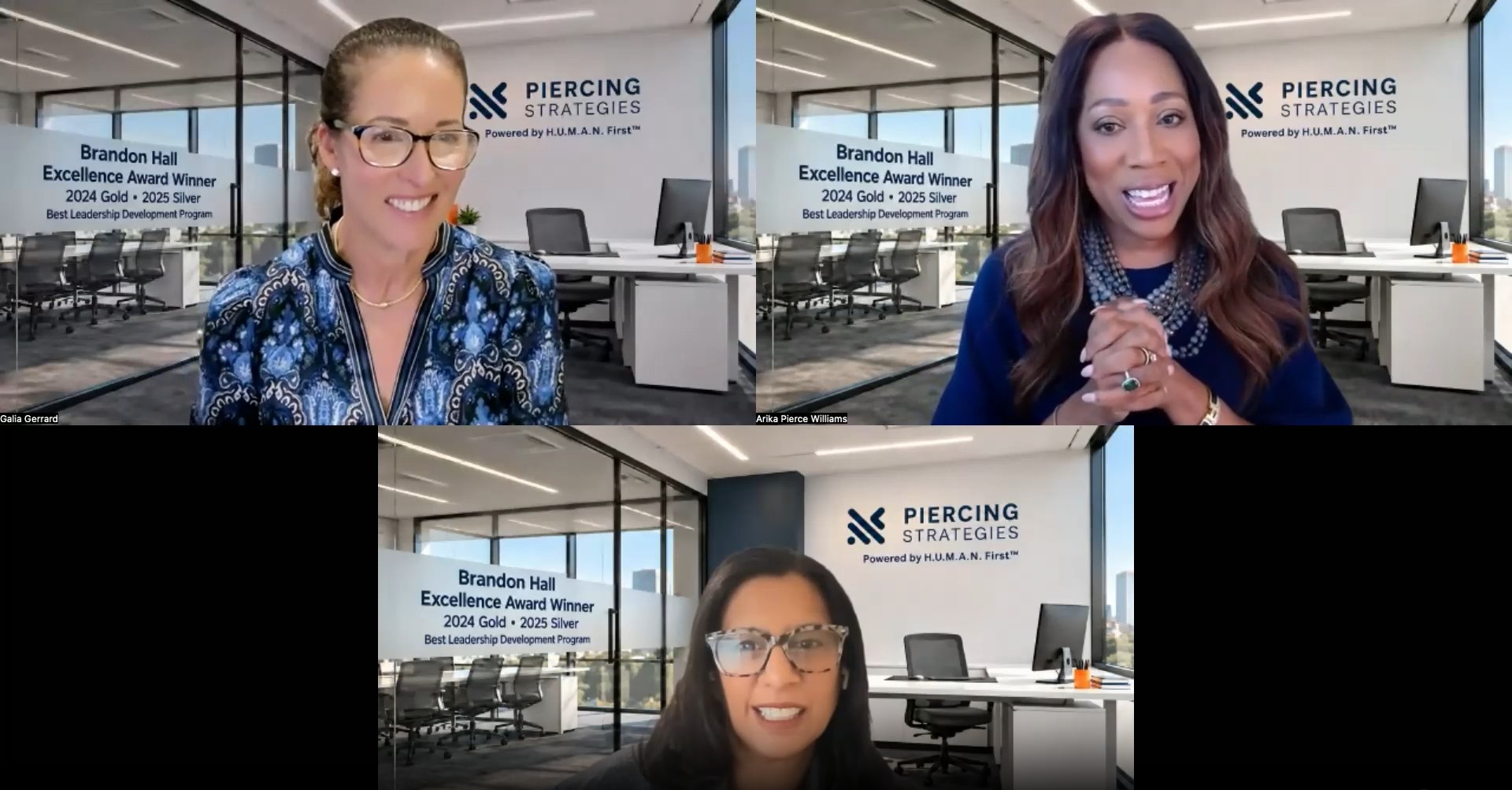
In our November 2026 Virtual Open House, our advisors shared real examples of the challenges leaders bring to us, how we approach our work, and what we believe will matter most in 2027.
Explore the highlights below or watch the full conversation.
Your content goes here. Edit or remove this text inline or in the module Content settings. You can also style every aspect of this content in the module Design settings and even apply custom CSS to this text in the module Advanced settings.
Meet the team

ARIKA PIERCE WILLIAMS
Arika leads our AI Adoption & Transformation practice — showing leaders how to move technology forward without leaving their people behind.
CEO + Founder · Practice Advisor, AI Adoption & Transformation
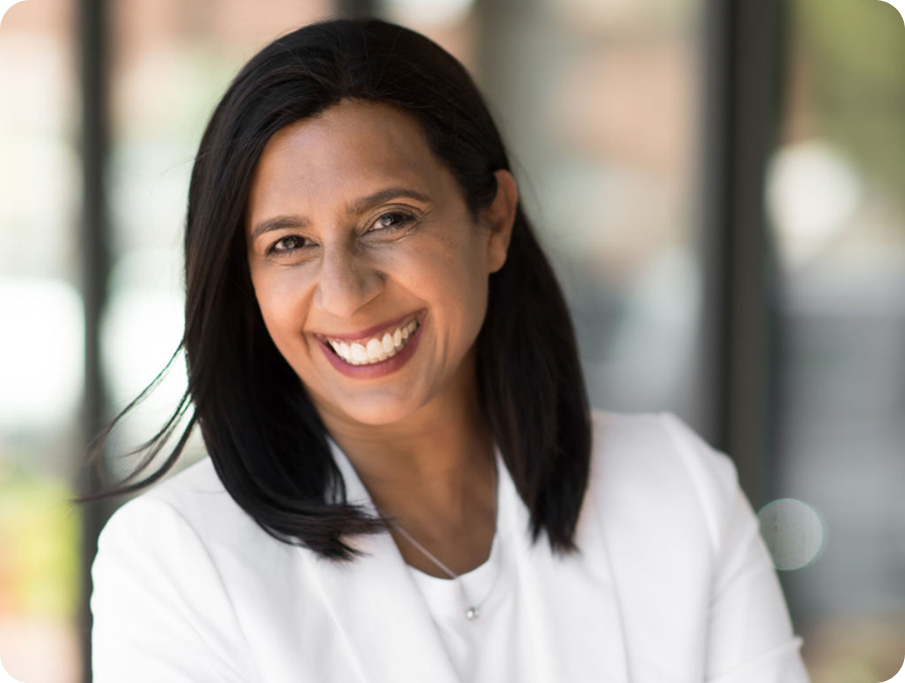
Jahnavi Brenner
Jahnavi leads Leadership Development — building leaders who carry transformation, not just approve it, and giving managers the tools to make change stick.
Practice Advisor, Leadership Development

Galia Gerrard
Galia leads Organizational Alignment & Culture — making sure change lands in the day-to-day, not just on paper, and that teams stay aligned long after launch.
Practice Advisor, Organizational Alignment & Culture
Five Times Leaders Call on Us
-
We’ve trained our leaders on AI. What’s next?
Your Title Goes Here
Your content goes here. Edit or remove this text inline or in the module Content settings. You can also style every aspect of this content in the module Design settings and even apply custom CSS to this text in the module Advanced settings.
Your Title Goes Here
Your content goes here. Edit or remove this text inline or in the module Content settings. You can also style every aspect of this content in the module Design settings and even apply custom CSS to this text in the module Advanced settings.
-
Who’s ready to step into our critical leadership roles?
Your Title Goes Here
Your content goes here. Edit or remove this text inline or in the module Content settings. You can also style every aspect of this content in the module Design settings and even apply custom CSS to this text in the module Advanced settings.
Your Title Goes Here
Your content goes here. Edit or remove this text inline or in the module Content settings. You can also style every aspect of this content in the module Design settings and even apply custom CSS to this text in the module Advanced settings.
-
Are we building a culture where people can thrive?
Your Title Goes Here
Your content goes here. Edit or remove this text inline or in the module Content settings. You can also style every aspect of this content in the module Design settings and even apply custom CSS to this text in the module Advanced settings.
Your Title Goes Here
Your content goes here. Edit or remove this text inline or in the module Content settings. You can also style every aspect of this content in the module Design settings and even apply custom CSS to this text in the module Advanced settings.
-
How do we make leadership development stick?
Your Title Goes Here
Your content goes here. Edit or remove this text inline or in the module Content settings. You can also style every aspect of this content in the module Design settings and even apply custom CSS to this text in the module Advanced settings.
Your Title Goes Here
Your content goes here. Edit or remove this text inline or in the module Content settings. You can also style every aspect of this content in the module Design settings and even apply custom CSS to this text in the module Advanced settings.
-
Is our executive team having the conversations that matter?
Your Title Goes Here
Your content goes here. Edit or remove this text inline or in the module Content settings. You can also style every aspect of this content in the module Design settings and even apply custom CSS to this text in the module Advanced settings.
Your Title Goes Here
Your content goes here. Edit or remove this text inline or in the module Content settings. You can also style every aspect of this content in the module Design settings and even apply custom CSS to this text in the module Advanced settings.
WATCH THE FULL OPEN HOUSE
Three Predictions for 2027
Our Human-First Approach
H.U.M.A.N. First™ is our award-winning leadership framework designed to help organizations navigate change, strengthen performance, and achieve lasting transformation. Built around five uniquely human capabilities, it equips leaders to do what technology alone cannot: build trust, create alignment, inspire action, and lead through uncertainty.

The True Cost of Toxic Leadership: Why Bad Managers Cost Companies $1.7M Annually
New research reveals toxic leaders cost organizations 8.7x their salary—up to $1.74M annually. Learn to identify, quantify, and address toxic management.

The $Million Leadership Development Mistake (And How to Fix It)
Organizations waste enormous potential by limiting leadership development to people managers while ignoring their most influential individual contributors. Technical experts and functional leaders—those who choose expertise over management—already lead through influence, knowledge, and earned respect. Yet they receive no leadership development investment despite directly impacting team performance, cross-functional collaboration, and organizational culture. Gen Z research confirms this trend is accelerating: emerging professionals explicitly prefer individual contributor paths over people management. The solution isn’t convincing them to become managers—it’s recognizing that individual contributors need leadership skills (influencing without authority, strategic thinking, cross-functional collaboration) just as much as managers do. Organizations that develop both people leaders and individual leaders create competitive advantages competitors can’t replicate.

The Leadership Crisis Gen Z is Solving for Us
52% of Gen Z professionals actively reject middle management roles, creating an unprecedented Gen Z leadership crisis that threatens organizational continuity. But our research with 33 participants across five industries reveals Gen Z isn’t rejecting leadership—they’re rejecting broken, unsustainable leadership models. The data is stark: 54% of Gen Z are disengaged, 34% plan to leave within two years, and 71% of current leaders report significant stress. Gen Z watched previous generations burn out in management roles and concluded the cost-benefit doesn’t work. The Gen Z succession planning crisis stems from four factors: current leaders serving as cautionary tales, development starting too late, career paths mismatched to Gen Z values, and homogeneous leadership deterring diverse talent. Organizations solving the Gen Z leadership crisis through early development, reimagined career lattices, and sustainable leadership models are seeing remarkable retention and engagement results. This isn’t a generational quirk—it’s a fundamental shift requiring immediate succession planning transformation.

Leadership Development Before Promotion: The Right Approach
Most organizations promote high performers into leadership roles and then scramble to provide leadership development after they’re already struggling. This “promote first, train later” approach creates overwhelmed new leaders, suffering teams, engagement drops, and productivity losses. Proactive leadership development before promotion—building leadership competencies while people excel in current roles—creates confident, prepared leaders who hit the ground running. Organizations implementing leadership development before promotion strategies see smoother transitions, stronger succession planning, deeper bench strength, and cultures that attract high performers. The shift requires assessing leadership readiness early, developing competencies systematically before promotion opportunities arise, and measuring leadership preparedness like any critical business metric. Leadership development before promotion isn’t just better practice—it’s strategic necessity for sustainable succession planning and organizational performance.

Middle Manager Burnout Crisis: Why Your 2025 Strategy Execution Is at Risk (And How to Fix It)
Middle managers now have the lowest engagement scores of any leadership level, creating an unprecedented middle manager burnout crisis that threatens 2025 strategy execution. Traditional middle management burnout solutions—workload audits, priority exercises, task reduction—are failing because the real issue isn’t just overload; it’s isolation. Research reveals middle manager burnout creates three critical organizational risks: strategic translation breakdown (managers stop effectively communicating strategy to teams), decision velocity collapse (burned-out managers bottleneck decisions), and talent development voids (overwhelmed managers abandon people development). The most effective middle manager burnout solution: Peer Connection Circles—monthly 90-minute forums connecting 8-12 middle managers without formal agendas or HR attendance. Early results show managers feeling less isolated, more supported, and more capable after just two months. This isn’t a people problem requiring resilience training; it’s a business execution problem requiring system-level solutions to middle manager crisis before leadership pipelines collapse.

Organizational Change Fatigue: When Teams Hit Breaking Point & How to Build Resilience
Organizational change fatigue destroys previously high-performing teams when continuous transformations exceed human capacity to adapt. A banking team experiencing their third major organizational shift in 18 months showed classic change fatigue symptoms: fractured communication, siloed thinking, tension-filled meetings, and emotional numbness. Traditional change management approaches failed because leaders focused on managing the change rather than managing the team experiencing change fatigue. The solution: structured interventions that acknowledge change saturation, create clarity on constant priorities, establish uncertainty-specific communication protocols, and build team resilience through honest dialogue. Results showed immediate shifts when senior leaders discovered their teams shared strategic concerns but had stopped raising them after previous feedback was ignored during earlier changes. Organizations addressing change fatigue proactively—before teams fracture—maintain performance during transformations while competitors experience change management burnout and organizational paralysis.

Leadership Development in the Workplace: What Works
The Conversation That Exposes a Fundamental Leadership Development Mistake In a recent conversation with the CEO of a mid-sized firm, I heard a statement that perfectly captures one of the most expensive mistakes organizations make with leadership development in the...

Leadership Culture Development: Why Training Without Culture Change Wastes Millions
Organizations spend billions annually on leadership development programs while struggling with succession planning because they ignore leadership culture development. Individual leadership training fails when leaders return to organizational cultures that don’t support or reward new behaviors taught in programs. The fundamental gap: organizations invest in teaching new leadership approaches while simultaneously reinforcing contradictory cultural norms through executive behavior modeling. Culture eats leadership development programs for breakfast—when leadership culture and training efforts misalign, culture always wins. Critical leadership culture assessment questions reveal the gaps: Do executives model taught behaviors? What behaviors actually get rewarded versus stated? What do emerging leaders say about the “price of admission” to leadership? How often do leaders choose values over expediency? What percentage of investment addresses culture versus individual skills? Transformative leadership culture development requires simultaneous investment in individual capability AND systemic culture change—aligning organizational leadership culture with development efforts through accountability, emerging leader involvement, and addressing cultural barriers directly.

Gen Z Leadership Perspectives: What Focus Groups Reveal About the Next Generation of Leaders
New focus group research into Gen Z leadership perspectives reveals fascinating contradictions—Gen Z professionals express genuine excitement about leadership opportunities while simultaneously harboring significant reservations about advancement. Gen Z is actively redefining leadership success, rejecting traditional top-down management for collaborative, purpose-driven, impact-focused roles aligned with personal values. The work-life balance equation is critical to Gen Z leadership perspectives: many question whether leadership and balance can coexist, with some stating they’d decline promotions requiring too much personal sacrifice. A significant generational understanding gap emerged—Gen Z leadership perspectives emphasize flexibility, purpose, and autonomy while perceiving older leaders prioritize long hours, corporate ladder climbing, and stability. Organizational implications: reimagine leadership development emphasizing impact over hierarchy, demonstrate viable work-life balance at leadership levels, create intergenerational dialogue, and allow leadership role customization. These Gen Z and leadership insights are essential for succession planning and attracting next generation leaders.

Making Leadership Attractive to Gen Z: Why Traditional Leadership Roles Aren’t Working Anymore
Only 19% of Gen Z workers express interest in management positions compared to 36% of Millennials at the same career stage—creating a leadership pipeline emergency. Making leadership attractive to Gen Z requires understanding their rejection isn’t about laziness but fundamental reassessment of what leadership represents. Gen Z declines management because they’ve witnessed burnout epidemics, calculated that compensation doesn’t justify personal costs, prioritize purpose over prestige, observed remote work revealing leadership dysfunctions, and seek diverse leadership models beyond traditional hierarchy. Organizations can’t ignore this shift—without fresh perspectives, they face innovation stagnation, market disconnection, retention challenges, and cultural ossification. Making leadership attractive to Gen Z demands systemic transformation: redefining success metrics, creating meaningful development, establishing alternative advancement paths, embracing transparency, integrating purpose, distributing leadership functions, and ensuring cultural representation. Real-world examples (Patagonia, Buffer, GitLab) prove reinvented leadership attracts Gen Z when it offers meaningful impact, sustainable workloads, and authentic connection.
HEAR
Deep listening that builds trust, surfaces concerns, and strengthens communication.
UNDERSTAND
Emotional intelligence and perspective-taking that improve decision-making and connection.
MOTIVATE
Purpose-driven leadership that inspires engagement, ownership, and performance.
AMPLIFY
Strength-based collaboration that unlocks collective potential and accelerates results.
NAVIGATE
Adaptive leadership that helps teams move confidently through change and complexity.
Join our next session
On Dec 9 at 11am ET, Mike Wynn, Head of the Academy for AI Capabilities & Enterprise Learning at Bank of America, joins Arika for a fire sidechat conversation on the role of leadership, the human capabilities that matter most, how to create meaningful learning experiences, and what it takes to measure real progress—not simply AI usage or training completions.